


A disciplined methodology for market-entry and investment decisions.
ICA's methodology is designed to help clients move from uncertainty to structured decision-making before capital is committed.
Discuss a Market Entry StudyFrom uncertainty to decision.
ICA's feasibility-study methodology follows five stages to answer:
Is this opportunity worth pursuing, and if so, under what conditions?

Frame
Define the client's decision question, scope, assumptions, constraints, and success criteria.
What We Clarify
- What opportunity is being assessed?
- What decision must the client make?
- What markets, products, channels, or segments are in scope?
- What assumptions need to be tested?
- What would make this opportunity attractive or unattractive?
- What must be proven before capital is committed?
Output
- Decision question
- Scope boundaries
- Client context summary
- Assumptions list
- Initial risk flags & Success criteria

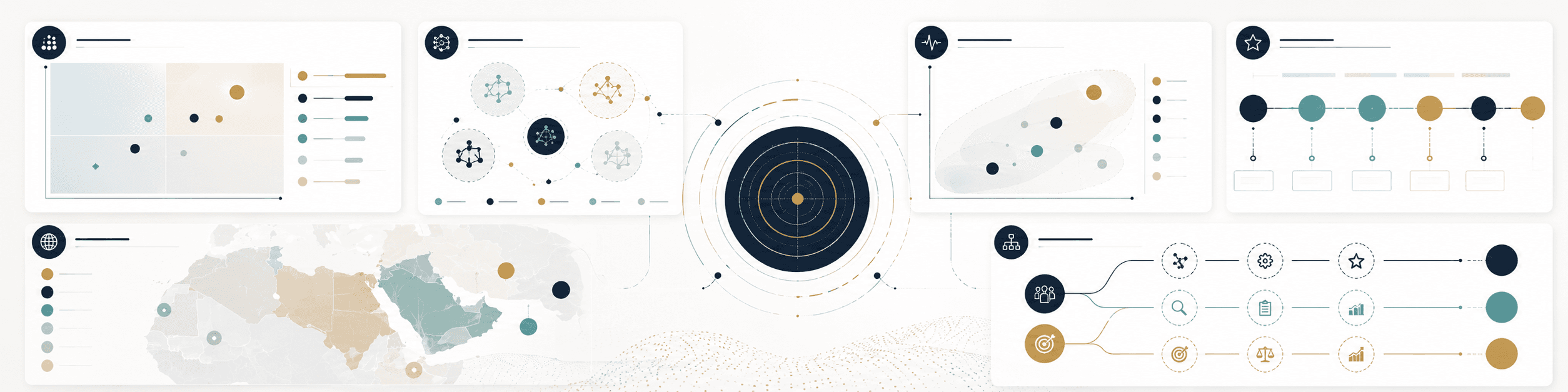
Assess
Analyze the commercial reality of the opportunity.
What We Assess
- Business concept and value proposition
- Product, service, or technical feasibility
- Market attractiveness & Customer demand
- Competitive landscape
- Country or market prioritization
- Regulatory pathway & Route-to-market options
- Supply chain, operating, or delivery feasibility
Output
- Market assessment
- Country or segment scorecard
- Customer and demand analysis
- Competitive positioning
- Regulatory pathway view
- Route-to-market & Operating logic
Model
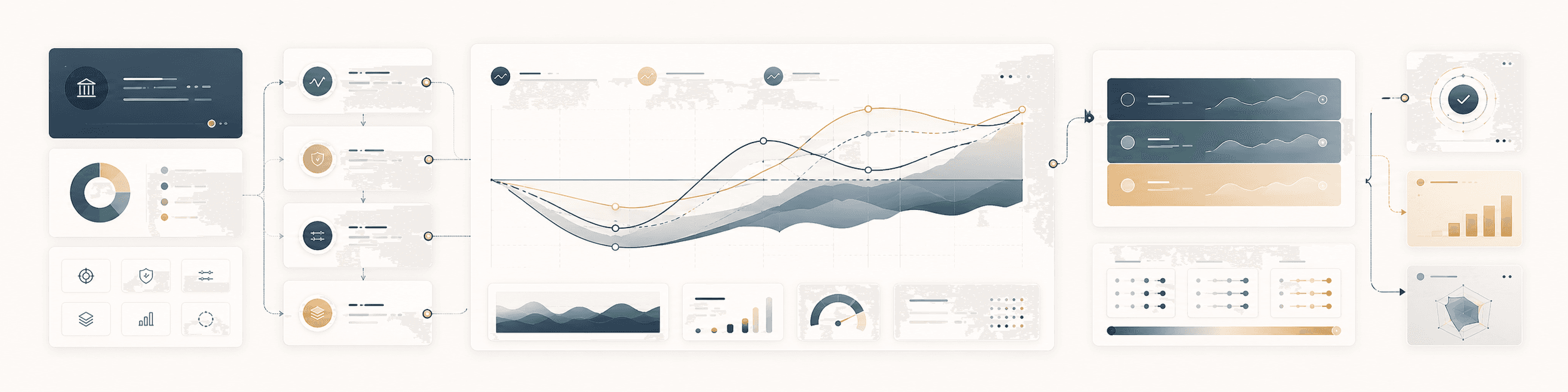
Test whether the opportunity makes financial sense.
What We Model
- Revenue assumptions & Pricing logic
- Cost structure & Unit economics
- Gross margin & Working capital
- Break-even & Cash needs
- Scenario and sensitivity analysis
- Payback or return logic, where relevant
Output
- Financial feasibility view
- Unit economics
- Base-case financial logic
- Best / base / worst case scenarios
- Sensitivity analysis
- Financial decision gates
Risk-Test
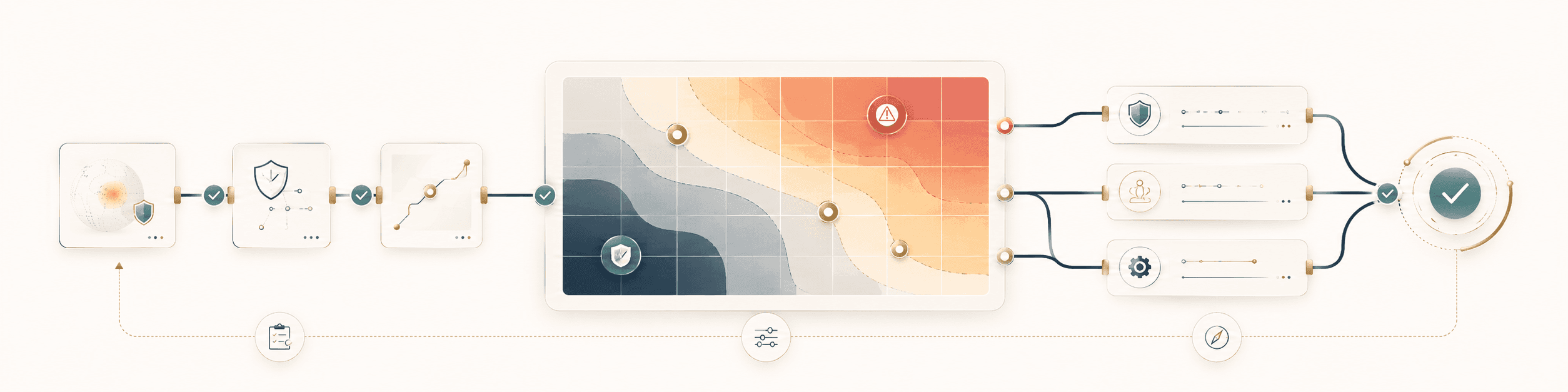
Identify what could go wrong and what must be controlled.
What We Test
- Market risk & Customer adoption risk
- Regulatory risk & Operational risk
- Financial risk & Partner risk
- Brand or reputation risk
- Macro or geopolitical risk
Output
- Risk register
- Mitigation plan
- Decision gates
- Stop / delay / proceed conditions
Recommend
Convert the analysis into a clear business decision.
Recommendation Types
- Go: The opportunity is attractive, risks are manageable, and execution requirements are realistic.
- No-Go: The opportunity is unattractive, too risky, economically weak, or strategically misaligned.
- Conditional Go: The opportunity is attractive only if specific gates, validations, or conditions are met.
Output
- Final recommendation
- Strategic rationale
- Key risks & Required mitigations
- Entry roadmap & Decision gates
- Next-step priorities

How ICA works with clients.
Step 1
Discovery
We meet with the client to understand the product, service, project, market ambition, constraints, and decision need.
Step 2
Preliminary Assessment
We develop a high-level view of the opportunity, risks, and strategic questions.
Step 3
Scope Confirmation
We define the structure and focus of the full Comprehensive Market Assessment Report.
Step 4
Comprehensive Study
We prepare the full report, including market, regulatory, commercial, financial, and risk analysis.
Step 5
Final Recommendation
We deliver a clear Go / No-Go / Conditional Go recommendation with a practical roadmap and decision gates.
Make the decision before making the investment.
ICA's methodology is built for clients who need practical answers before committing capital, partners, inventory, or management resources.
Request a Feasibility Review